Few things are more frustrating than settling into your car, plugging in your iPhone, and watching the screen stay stubbornly dark. The CarPlay icon never appears. The head unit says "no device detected." You try again, unplug and replug, and still nothing. If you have been asking why Apple CarPlay is not working, you are far from alone — this is one of the most common complaints in automotive tech forums, and it spans every iPhone model and virtually every vehicle brand.
The good news is that most Apple CarPlay not working issues are easily fixed in under 10 minutes. Common causes range from a bad Lightning port to a system problem. We will explain the possible reasons behind the AirPlay failure, starting with basic hardware checks, moving into software troubleshooting and discussing deeper system repairs.
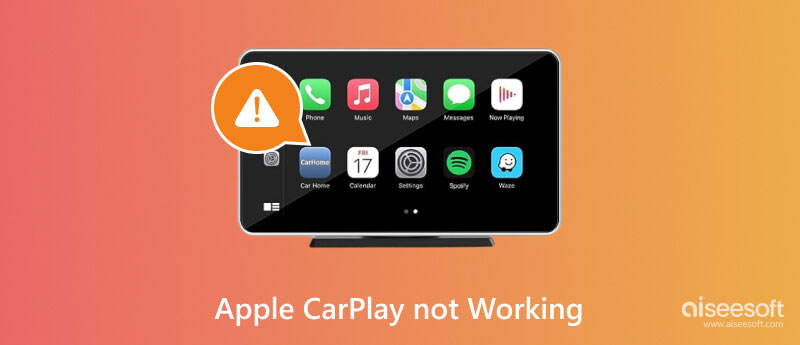
You may rely on CarPlay for navigation, music, and hands-free communication. So, when it won't connect or Apple CarPlay is not working properly, you will feel frustrated. There could be a variety of reasons for the problem. This section talks about several main causes.
When your iPhone CarPlay fails to connect or disconnects unexpectedly, you should start with some basic physical checks. Many CarPlay not working on iPhone issues are due to something as simple as a bad cable or a port full of pocket lint.
The cable is the weakest link in any CarPlay connection. Apple's CarPlay requires a data-capable cable—many cheap third-party cables only handle charging, so your iPhone may power up but never establish a data link with the head unit. Test this immediately by swapping in the cable that came with your iPhone or a known-good Apple-certified (MFi) cable.
The Lightning or USB-C connector on your iPhone accumulates lint and debris over months of pocket carry. If the connector feels loose or doesn't click firmly into place, that is a strong signal. Use a wooden toothpick or a soft brush to gently clear the port. Do the same for the USB port in your vehicle.
Many vehicles only support CarPlay through one specific USB port. Try a different USB port in your car. If possible, try connecting a different compatible iPhone to your car. If that phone works, the issue is with your device.
If you use wireless CarPlay, you should check and ensure Bluetooth and Wi-Fi are enabled. If either one is disabled, or if your iPhone is connected to the wrong Wi-Fi network (like home Wi-Fi or a public hotspot), CarPlay will fail to connect.
Open Control Center or Settings to confirm Bluetooth is enabled. Also, you should make sure Wi-Fi is enabled. If your phone is connected to a home or public network, it may refuse to join your car's network. If so, you can manually connect to the vehicle's network if it appears in the list.
If the above basic hardware checks don't resolve the CarPlay connectivity issue on your iPhone 16 or 17, the culprit is likely a software misconfiguration or a system glitch. Use the following troubleshooting steps to restore your connection.
To restart your iPhone, you can hold the Side button and either Volume button to bring up the power-off slider. Then, drag it to power off your iPhone. To reboot the head unit, press the physical power button (if the car has one) or use your car's controls.
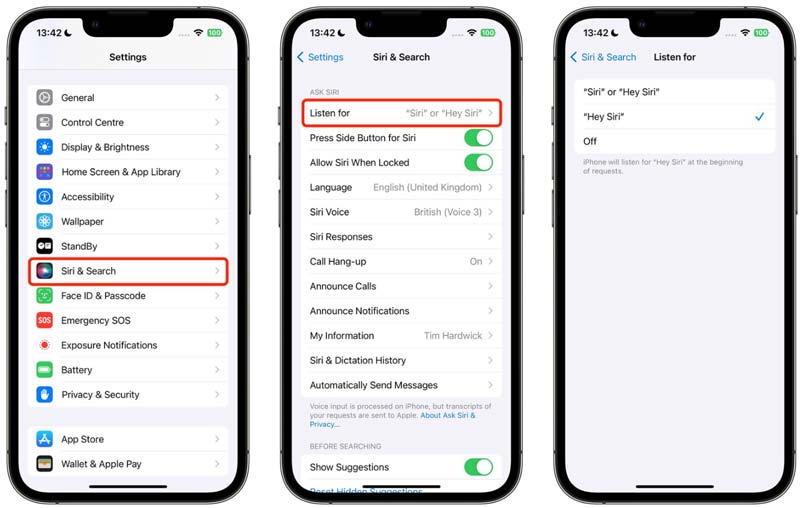
As mentioned, CarPlay requires Siri to be enabled. If it is turned off, or Screen Time restrictions block CarPlay entirely, you will see the CarPlay not working issue. When CarPlay doesn't appear at all in your iPhone settings, or when the CarPlay icon is missing from your car's display, you should check these settings.
Check Settings > Siri & Search and confirm that Listen for "Hey Siri" or the side button setting is enabled.
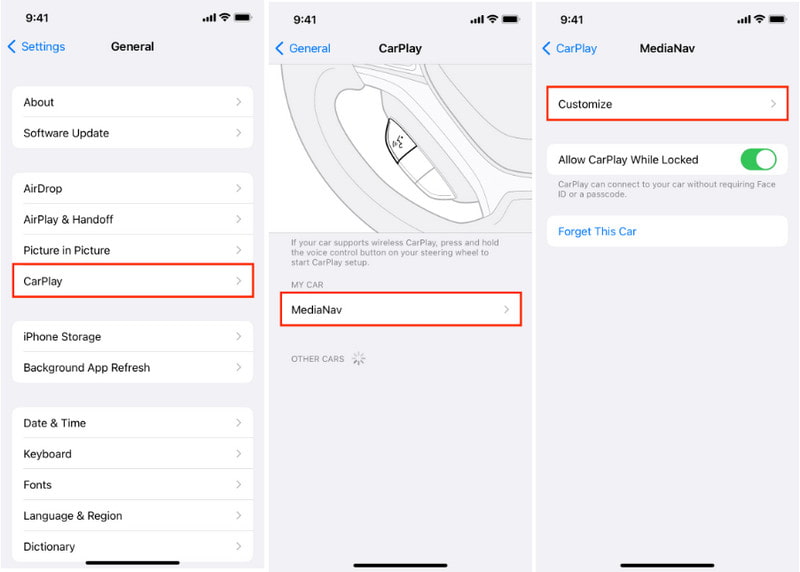
Check that CarPlay is enabled. Go to Settings > General > CarPlay. Confirm your car appears in the list. If it does, tap it and make sure Allow CarPlay While Locked is toggled ON. If this is off, CarPlay will fail every time your phone screen goes to sleep.
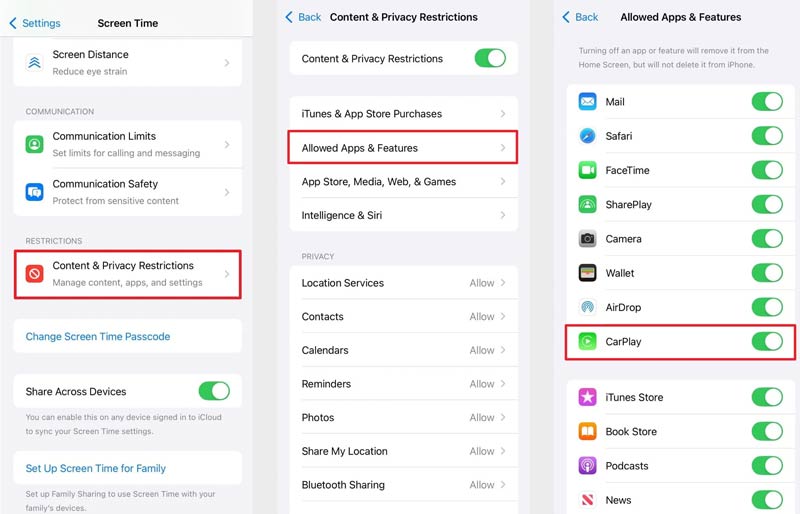
Next, go to Settings > Screen Time > Content & Privacy Restrictions. If restrictions are enabled, tap Allowed Apps and check if CarPlay is toggled on.
If the connection worked before but now fails consistently, the pairing data between your iPhone and the head unit may be corrupted. The fix is to delete the saved pairing and start fresh. This is slightly inconvenient — you will need to reconfigure your CarPlay layout afterward — but it resolves a wide range of stubborn failures.
On your iPhone, go to Settings > General > CarPlay, tap your car's name, and choose Forget This Car.
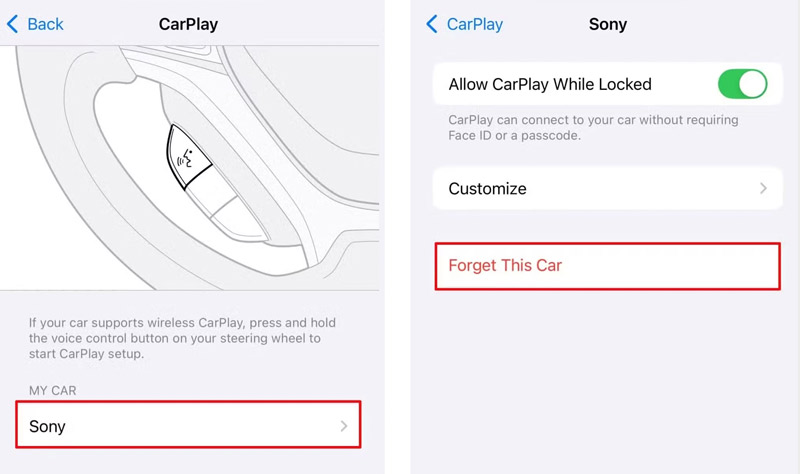
Then, you should delete the Bluetooth pairing from both the iPhone and the head unit's Bluetooth menu. On iPhone: Settings > Bluetooth > find your car > tap the i icon > Forget This Device. Restart both devices, then reconnect.
In some cases, your CarPlay failure is not related to cables, pairings, or settings. Instead, the issue may be caused by a deeper system problem, such as a failed update, corrupt system files, or other underlying system-level disruptions. Standard troubleshooting can't fix these problems. You must turn to a dedicated system repair tool.
Aiseesoft iOS System Recovery is a desktop application that diagnoses and repairs iOS system problems without erasing your data. It handles a range of failures — from CarPlay not connecting to boot loops and frozen screens. The tool offers two modes: a standard repair that preserves all data, and a deeper mode that wipes the device as a last resort. For CarPlay issues, the standard mode is almost always sufficient.
 100% Secure. No Ads.
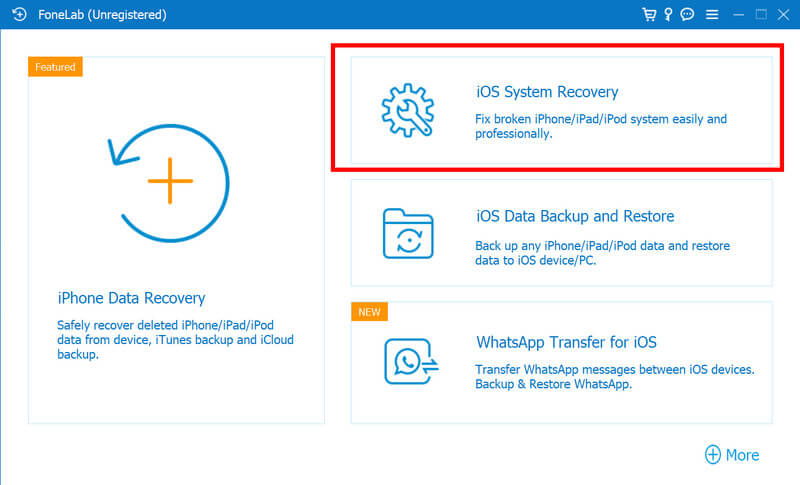
Download and launch Aiseesoft iOS System Recovery on your Windows PC or Mac. From the main menu, select iOS System Recovery and connect your iPhone to the computer using a USB or USB‑C cable.
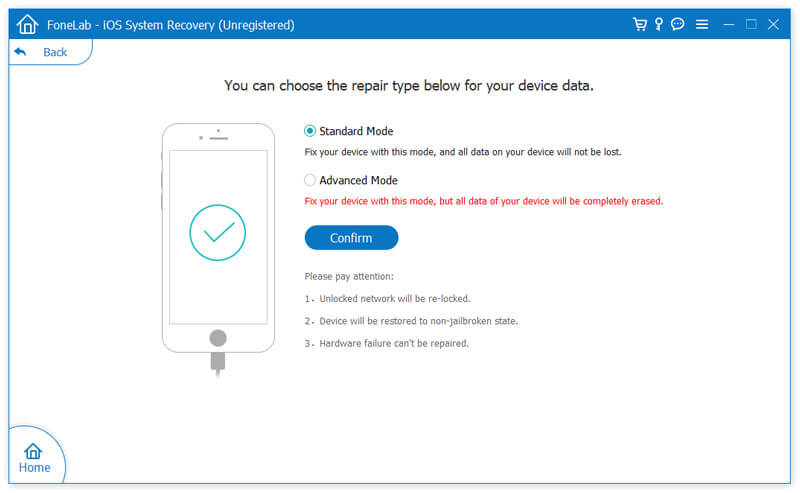
Choose the Standard Repair mode (which fixes system issues without erasing your data) and follow the on‑screen prompts to download the appropriate firmware package for your device.
Wait for the firmware download and repair process to finish—this may take a few minutes. Once completed, your iPhone will restart. Reconnect your iPhone to CarPlay and test the connection to verify that the issue has been resolved.
Question 1. Why is CarPlay not working on iPhone?
Newer iPhone models running the latest iOS sometimes encounter compatibility issues with older head units. Make sure your head unit's firmware is up to date, and try the software troubleshooting tips above. If nothing works, the system recovery tool is a reliable option.
Question 2. Why does CarPlay keep disconnecting while driving?
Intermittent disconnects, such as a faulty cable or a loose connection, often cause the problem. If you use wireless CarPlay, you should check for Wi-Fi interference from other devices in the car. If your iPhone 16/17 Apple CarPlay suddenly stopped working after an iOS update, the firmware update may be the reason.
Question 3. Can I use CarPlay without a USB cable?
Yes, if your car supports Apple wireless CarPlay, you can use CarPlay without a cable. This requires both Bluetooth and Wi-Fi to be enabled on your iPhone. Not all head units support wireless, so check your owner's manual.
Question 4. Why does my iPhone charge but CarPlay won't connect?
USB power and USB data transfer use different paths. If your cable's data pins are broken, it may only deliver power. What's more, some USB ports in cars are charge-only. Try a different cable or USB port to see if CarPlay works again.
Conclusion
CarPlay won't connect is a common issue among iPhone users. The good news is that most Apple CarPlay not working problems can be easily resolved. Start with the basics to troubleshoot. For example, check your cable, try a different port, and make sure Bluetooth and Wi-Fi are enabled. If those don't work, move on to software fixes.
 How to Fix iPhone Alarm Volume Low – 5 Methods
Discover the 5 ways to understand and fix the iPhone volume low issue that you have encountered. Plus, we include a tutorial that you should apply at once.
 How to Stop Apple Music from Automatically Playing [iPhone/CarPlay]
Don’t know how to stop Apple Music from automatically playing on your iPhone or car? Here are 9 solutions and tips to help you stop Apple Music!
 How to Blur a Picture on iPhone or Some Specific Parts Quickly
Discover the secrets of blurred pictures on iPhone with the step-by-step guide we teach here. Master the art of blurring with ease and add blurry effects to it immediately.
 Leave your comment and join our discussion

Fix your iOS system to normal in various issues like being stuck in DFU mode, recovery mode, headphone mode, Apple logo, etc. to normal without any data loss.
100% Secure. No Ads.
100% Secure. No Ads.

*Required field
*Please enter a valid email