It’s annoying if your iPhone keeps saying no SIM while there is one.
You pick up your iPhone, glance at the top corner, and there is a No SIM prompt, with no bars or carrier name. You may worry about this frustrating message, which cuts you off from calls, texts, and mobile data.
We have to admit that this iPhone says no SIM error is quite common. You may feel urgent because your iPhone suddenly can’t talk to the cellular network. In most cases, the error goes away on its own after a while. What if your iPhone randomly or repeatedly says no SIM available?
The good news is that roughly 80% of “iPhone says no SIM” errors can be automatically fixed after several minutes. What’s more, you can easily resolve nearly all issues with a few steps. This guide covers common scenarios where your iPhone may say no SIM detected, installed, or available, and offers 8 helpful solutions.
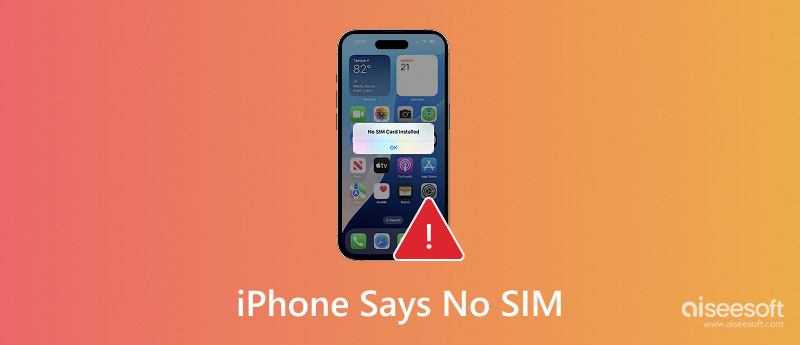
When you search “iPhone says No SIM,” you are not just curious about the error message. You want two things: to understand why your iPhone fails to connect to the SIM, and to find a fix that actually works.
You might be dealing with a loose card, a software glitch, or something deeper like a baseband failure. This section talks about why the No SIM or Invalid SIM alert/error appears on your iPhone.
- A loose or damaged SIM card. This is the most common culprit. When your iPhone’s SIM tray isn’t fully closed, or the card has shifted inside the tray, your device can’t read it properly. If you often remove and re-insert the card, scuffs, scratches, oxidation, or even dust may also stop the connection.
- Carrier lock. If you bought your iPhone through a carrier and haven’t paid it off, it may be locked to that network. A locked iPhone will only accept a SIM from that specific carrier. You can check this by going to Settings > General > About and looking at “Carrier Lock.” If it says “No SIM restrictions,” your phone is unlocked. If it shows a carrier name, that’s your problem.
- iOS bugs and software glitches. Sometimes, the iPhone’s software gets stuck in a state where it fails to recognize the SIM. This can happen after an update or just randomly.
- Baseband or modem issues. The cellular modem chip is hardware that handles all cellular communication. When it fails, the iPhone won’t detect any SIM, physical or eSIM. This hardware fault needs professional repair.
- eSIM corruption. If you use an eSIM (on iPhone 14 or later in the US), the error may be caused by a corrupted or deactivated digital profile. This often happens after a carrier update or a device restore. You might see “No SIM,” “No Service,” or an activation failure message.
After understanding why your iPhone says no SIM or prompts “Invalid SIM” in the corner, you can start to fix it. Start with the simple steps. In most cases, one of the first few steps will bring your iPhone back to normal condition.
Restarting is always a good first way when you run into errors or issues. A restart will effectively clear temporary software glitches that can confuse the SIM detection system. In many cases, this action can easily fix the iPhone says no SIM issue.
Power off your phone, wait a few minutes, then restart it. Enter your iPhone passcode to unlock it, then check whether the “No SIM” error is solved. If the device is currently unresponsive, try a forced restart. Use the related button combinations to force shut down your iPhone.
Airplane Mode quickly cuts off all wireless radios. You can enable it to force your iPhone to disconnect from the network. Wait about 30 seconds or longer, and then turn it off. This forces your iPhone to re-register with the cellular network and refresh the connection.
You can simply swipe from the top-right part of your iPhone screen to display the Airplane Mode icon. You can also go to Settings to find the option.
If you have a physical SIM, remove it, clean it, and re-insert it properly. This is also an efficient way to fix the iPhone “No SIM” issue.
Carriers occasionally push updates that change how your iPhone connects to their network. These aren’t the same as iOS updates. Worse, in some cases, you have to install them manually.
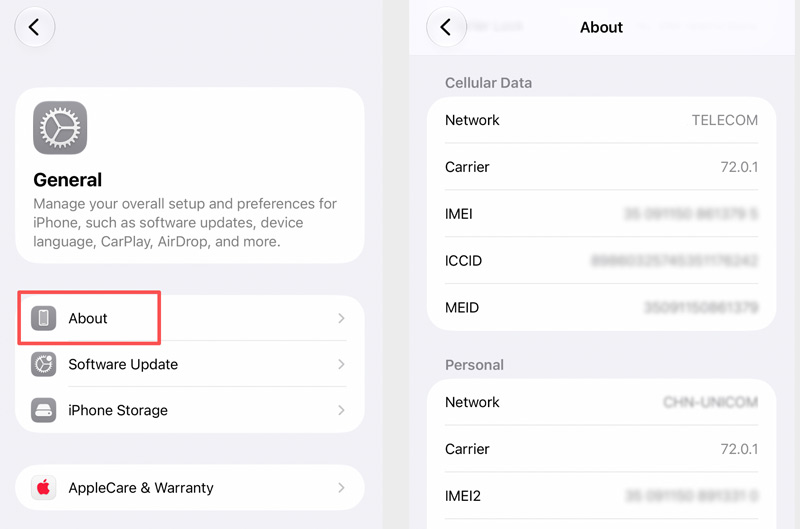
If your iPhone runs an outdated iOS, try updating the software to troubleshoot the “iPhone says no SIM” Problem. You should know that Apple often fixes various system issues, including cellular bugs, in iOS updates.
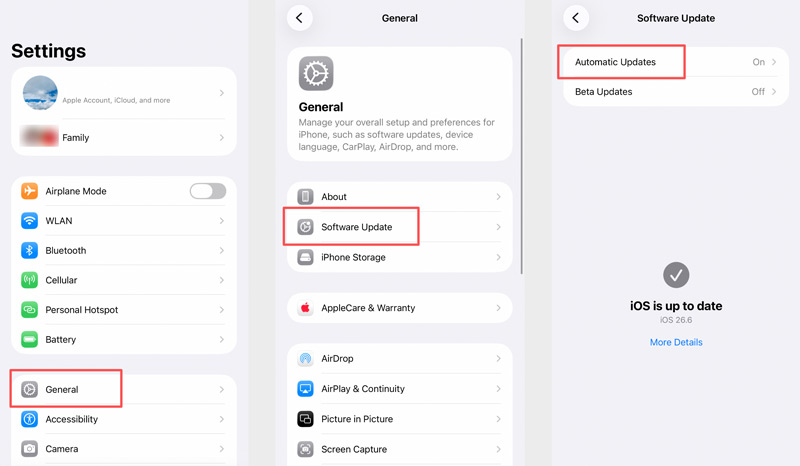
If your iPhone is running an older version, the new iOS may already include a patch for a known SIM detection issue.
If you want to troubleshoot the iPhone No SIM error without erasing your iOS data, try resetting all network settings. This operation wipes your saved Wi-Fi passwords and Bluetooth pairings. It can also clear out any corrupted network configurations that might be causing the SIM problem.
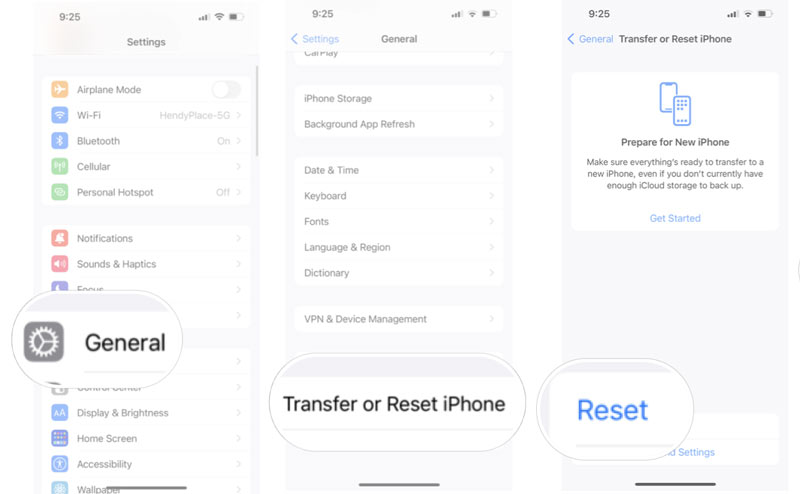
1. Go to Settings > General > Transfer or Reset iPhone.
2. Tap Reset, then choose Reset Network Settings.
3. Enter your iPhone passcode to confirm. Your iPhone will restart.
Check if your carrier name appears. Reconnect to your Wi-Fi networks afterward.
If you have another SIM (especially from the same carrier), use it to test the network service. If it works well on your iPhone and doesn’t show any alerts/errors, this means the original SIM card might be damaged.
If your carrier supports eSIM, you can consider switching to an eSIM. This can bypass a faulty SIM tray or card reader entirely. Contact your carrier to activate your eSIM profile.
When the standard fixes don’t work, the No SIM or Valid SIM problem may be related to the iOS system. To effectively resolve the cellular recognition failures, you can rely on a system repair tool like Aiseesoft iOS System Recovery. The software is specially built for this kind of situation. It can fix all types of system issues without requiring a factory reset. It supports all modern iPhone models and iOS versions and doesn’t require technical expertise.
 100% Secure. No Ads.
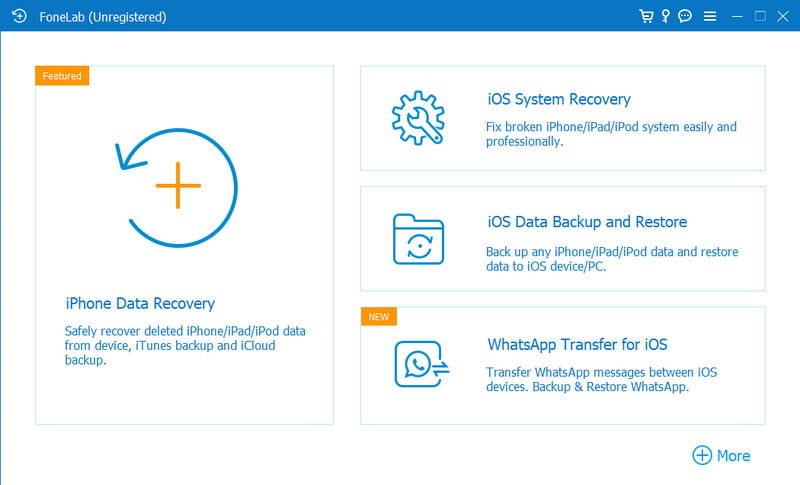
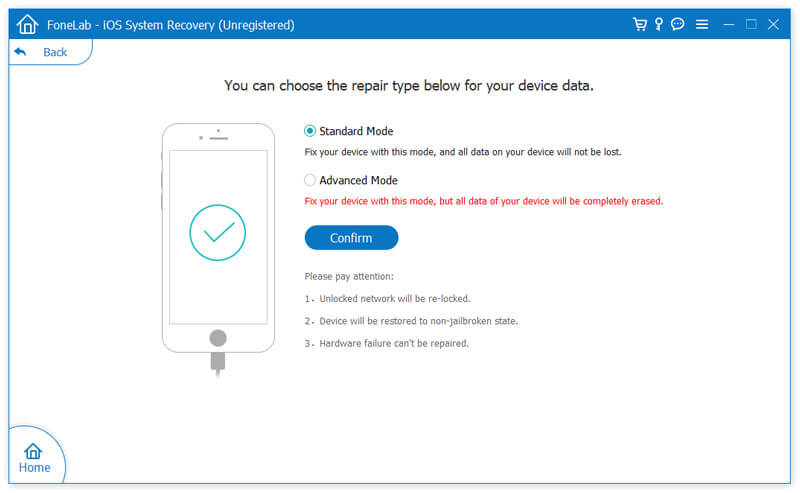
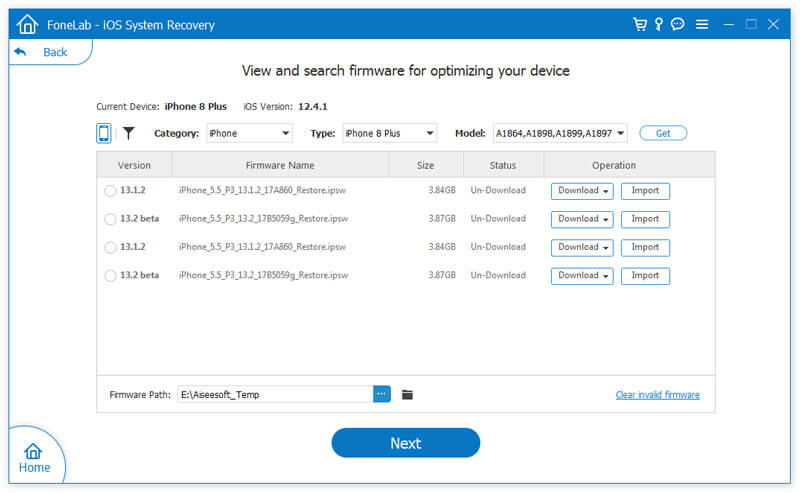
If Standard Mode cannot solve the problem, you may need to turn to Advanced Mode. This mode is mainly used for more severe system corruption. Using it will wipe your iPhone data.
If you have tried everything above and your iPhone still shows No SIM, Valid SIM, or a similar SIM not available error, it’s time to contact your carrier or Apple Support.
Contact Apple Support if:
- You have tried another SIM and your iPhone still won’t recognize it.
- The SIM tray or card reader appears physically damaged.
- You are seeing hardware-related error codes in the diagnostics.
- Your IMEI doesn’t show up when you dial *#06#. This means a baseband failure.
Contact your carrier if:
- Your SIM card is physically damaged.
- Your iPhone is carrier-locked.
- Your eSIM profile is corrupted.
- Your account has been suspended.
- A different SIM card from the same carrier works well.
Question 1. Can I use an iPhone without a SIM card?
Yes, you can use all types of apps on your iPhone normally with a Wi-Fi connection. Everything except cellular calls, texts, and mobile data will work fine. You can also use other built-in iPhone features, such as the camera, Notes, Voice Memos, and Calendar.
Question 2. What does “No SIM restrictions” mean on an iPhone?
It means your iPhone is unlocked and can use a SIM from any carrier. If you see a carrier name instead, your phone is locked to that network.
Question 3. Why does my eSIM say No SIM?
Sometimes, if your eSIM profile is deactivated, corrupted, or improperly provisioned, you may see the No SIM error even if you are using eSIM. Use the methods above to troubleshoot. In most cases, restarting your iPhone or toggling Airplane Mode will fix the issue.
Conclusion
The good news is that most iPhone No SIM cases are fixable at home.
Most of the time, a restart, reseating the SIM card, or resetting network settings can bring your service right back. If the problem is deeper, tools like iOS System Recovery can fix the underlying system issues without wiping your data. And if nothing works, your carrier or Apple Support can diagnose whether it’s a SIM issue, an account issue, or a hardware fault.
 Troubleshooting iOS 18/17/16/15/14/13 Update Problems on iPhone and iPad
This post lists the latest iOS update problems on iPhone/iPad/iPod while or after updating to iOS 18/17/16/15/14/13, including iOS update failure, message problems, Wi-Fi issues, etc.
 5 Tips to Troubleshoot iPhone Force Restart Not Working
Why is my iPhone 15 force restart not working? How can I force restart my iPhone 14 when frozen? Get 5 helpful tips to fix iPhone force restart not working.
 Troubleshooting Tips and Solutions for iPhone Won't Turn On
Why won't my iPhone 15 turn on? What to do if my iPhone won't power on and has stopped working? Learn why an iPhone won't turn on and seven ways to fix it.
 Leave your comment and join our discussion
Fix your iOS system to normal in various issues like being stuck in DFU mode, recovery mode, headphone mode, Apple logo, etc. to normal without any data loss.
100% Secure. No Ads.
100% Secure. No Ads.

*Required field
*Please enter a valid email