Video Converter Ultimate
 100% Secure. No Ads.
The MKV vs MP4 question keeps coming up.
If you often capture, download, or save video files, you may be familiar with MP4 and MKV. As a general user, you may think MKV is better or higher quality than MP4. However, in some cases, your device or player refuses to play MKV files, which can be confusing. Sometimes, you worry that MP4 can’t deliver the same quality as MKV. Is MKV really better than MP4?
Below, I will break down what each container is, compare their main advantages and drawbacks, and tell you when to pick the right one for your needs.
MKV (Matroska Video) is an open-source container that favors flexibility. It can hold multiple codecs, audio tracks, subtitle streams, chapters, and attachments. This royalty-free container is built on the EBML structure.
MP4 (MPEG-4 Part 14) is the most popular video format standardized in 1998. It is compatible with nearly all (over 98%) devices, systems, players, and web browsers. Platforms like Facebook, X, TikTok, YouTube, Twitch, and Instagram also natively accept it.
One thing to be clear about: both MKV and MP4 are containers, not codecs. A container is just the “box” that holds your video, audio, subtitles, and metadata. The codecs and other data inside the container determine the actual quality.
To help you quickly get a basic understanding of MKV and MP4, this section gives a comparison table.
| Feature | MKV | MP4 |
| Container Type | Open-source, EBML-based | ISO/IEC standard, atom-based |
| Developer | Matroska Project (open community) | MPEG (ISO/IEC 14496-14) |
| Release Year | 2002 | 1998 |
| File Extension | .mkv | .mp4 |
| Video Codecs | Almost all: H.264, H.265, VP9, AV1, MPEG-4 | H.264, H.265, VP9, AV1, MPEG-4 |
| Audio Codecs | Nearly all, including FLAC and PCM | AAC, ALAC, FLAC, MP3, Opus |
| Subtitle Support | SRT, ASS/SSA, PGS, and VobSub | Limited (TTML, tx3g) |
| Multiple Tracks | Unlimited, unrestricted | Support, but less flexible |
| Chapters & Menus | Rich support | Basic, limited |
| Browser Playback | No native support | Universal |
As mentioned above, one big advantage of MKV is its high codec flexibility. Generally, it can hold any codec, such as H.264, HEVC, VP9, or AV1. That means you can use MKV to preserve high-end audio (Dolby TrueHD or FLAC), multiple subtitle tracks, and metadata alongside the video.
MKV supports soft subtitles in SRT, ASS/SSA, PGS, and VobSub formats. You can freely toggle them on or off, switch between languages, and preserve styled formatting. Moreover, MKV can hold more metadata and chapters.
Another advantage of MKV is the crash recovery capability. Compared to MP4, it has better resilience to corruption. MKV writes media into independently parseable clusters, each carrying its own index. This makes an interrupted file much easier to recover.
MP4 can deliver unmatched compatibility. As the most popular video format, it is supported by mobile phones, smart TVs, gaming consoles, players, modern browsers, social platforms, and car infotainment systems.
MP4 often comes with a smaller file size for better web delivery. It is the delivery standard for the web. It can hold a single video track and one audio track for more efficient streaming.
What’s more, MP4 is supported by almost all video editors. Whether you want to edit it on your phone with an editor app or handle it on your desktop with professional editors like Premiere Pro, DaVinci Resolve, or Final Cut, you don’t need to convert or remux.
We have to admit that MP4 is often the safer choice for most cases. If you want your video file to be supported by most devices and systems, choose MP4. However, if you prefer high-fidelity media and multiple audio/subtitle tracks, turn to MKV.
Choose MKV When:
Choose MP4 When:
If you need to convert between the two formats, Aiseesoft Video Converter Ultimate is a top contender that handles the conversion efficiently. It supports common SD, HD, 4K, and even 8K video conversion to MP4, MKV, and other popular formats.
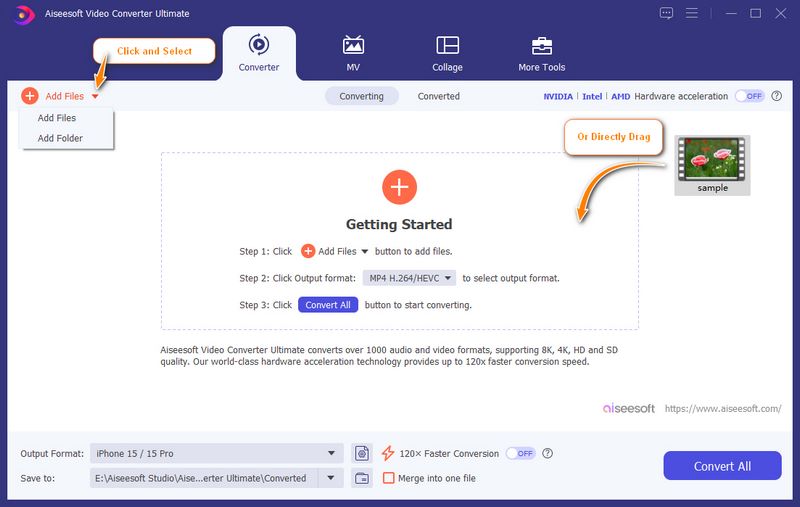
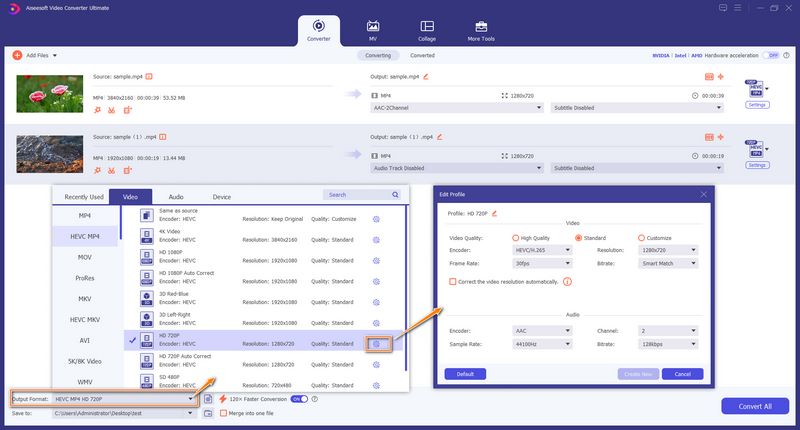
One standout feature is its remuxing technology. It provides various output presets for different devices and platforms. Moreover, it lets you customize settings to choose an MP4 or MKV format that fits your needs. The software supports batch conversion and delivers conversion speeds up to 120× faster. Aiseesoft lets you copy encoded streams without re-encoding. This ensures the output file you get has no quality loss.
100% Secure. No Ads.
100% Secure. No Ads.
The MP4 and MKV conversion workflow is straightforward. Add your MP4 or MKV file(s), select the desired format from the Output Format dropdown, and convert. Besides MP4 and MKV, it lets you output MOV, AVI, FLV, or any other format you need.
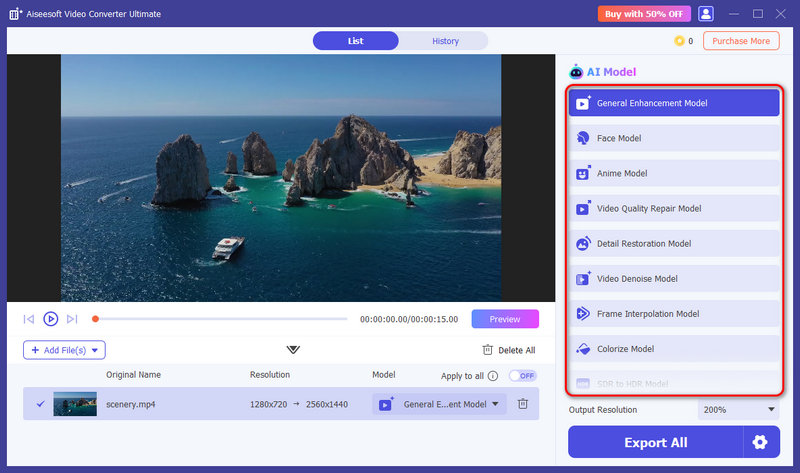
Beyond basic conversion, the software offers AI-powered video editing, compression, and enhancement tools. It allows you to upscale videos to 4K or higher with added details and improved quality.
Question 1. Does MKV have better video quality than MP4?
No. As mentioned above, both MKV and MP4 are containers. The “box” doesn’t affect quality. The codecs in the containers do. So you cannot simply say MKV has better quality than MP4 or that MP4 is better than MKV.
Question 2. Can I play MKV files on my phone or TV?
Most modern Android phones and smart TVs support MKV natively. However, Apple devices, such as iPhones and iPads, do not support it. If you get a playback error, convert MKV to MP4 for playback across all devices.
Question 3. Will converting MKV to MP4 lose quality?
If your MKV file has several subtitle and audio tracks, converting it to MP4 often reduces quality. The final quality also depends on the converter you use and the settings you choose. If you use a remuxing tool, it can copy the video and audio streams with no re-encoding. In that case, the output quality will remain the same. However, if you transcode, the quality may degrade.
Conclusion
Hope you learned the key differences between the two containers after reading this MKV vs MP4 article. Actually, both are popular “video formats” and can be supported by modern devices and systems. If you prefer multiple audio and subtitle tracks, MKV is a better choice. For daily use, MP4 is the safe bet in most situations.
 AVI vs MP4 – What is the Difference & Which One is Better?
Both MP4 and AVI are popular video formats. But what's the difference between them? Which of them is better? In today's article, we will compare MP4 and AVI in detail and offer you some useful methods to convert one to the other.
 Compare M4V with MP4 and Make the Conversion from M4V to MP4
Can VLC convert DRM-protected M4V to MP4 for free? How do you turn your M4V video into MP4 using HandBrake? Learn 5 effective methods to convert M4V to MP4.
 Top 5 MKV Recorders on Windows/Mac/iPhone/iPad/Android Device
Here are top 5 best MKV recording software to help you record screen, gameplay, video and more on computer and mobile devices easily.
 Leave your comment and join our discussion
Convert/Download/Edit SWF
1.1 SWF 1.2 SWF to MP4 1.3 SWF to GIF 1.4 SWF to MOV 1.5 SWF to HTML5 1.6 SWF to AVI 1.7 SWF to WMV 1.8 SWF to 3GP 1.9 SWF to DVD 1.10 SWF Converter Mac 1.11 Edit SWF
Video Converter Ultimate is excellent video converter, editor and enhancer to convert, enhance and edit videos and music in 1000 formats and more.
100% Secure. No Ads.
100% Secure. No Ads.

*Required field
*Please enter a valid email