Can’t capture your own voice through the microphone of your iPhone?
Whether you can’t capture sound in a video recording or the other person on a call can’t hear a word you are saying, the iPhone microphone not working issue can be quite frustrating.
Your iPhone microphone might have worked just fine yesterday, and now every call, voice memo, video/audio recording, and FaceTime session is met with silence or a muffled mess. If you are trying to figure out whether your mic is genuinely broken or if you've overlooked a simple setting, read this guide carefully. We will walk you through testing each microphone and fixing the problem step by step. Take 8 helpful tips to troubleshoot the iPhone microphone stopped working problem before seeking professional help.
Before you start troubleshooting, you need to figure out which of your iPhone’s microphones is causing trouble.
Modern iPhones have at least three microphones for different jobs. You can find the primary mic (bottom microphone) near the charging port for phone calls. The front microphone handles FaceTime and selfie videos. There is also a rear microphone to capture clear audio when you record videos with the back camera. If your iPhone microphone isn’t working on calls, you’re likely dealing with a bottom mic issue.
You can easily test each one using different apps. First, you can use the Voice Memos app to record a short clip while speaking directly into the bottom of your phone. Then, play the recording. If you hear your voice clearly, the primary mic is fine. If it is silent, that means your bottom mic is likely blocked or broken.
Open the Camera app and capture a video with the front camera while speaking. Play it back and check which microphone is failing. You can also use other apps to test your iPhone microphones.
Once you know which microphone is misbehaving, or if all your iPhone microphones are not working, it’s time to fix it. This section walks you through 8 useful methods to handle the mic issue. Start with simple solutions, then move to more involved troubleshooting.
Many microphone problems come down to a case or screen protector covering the tiny openings. If you use an unsuitable screen protector or case, it may have no proper cutouts for the microphone grilles or partially block the earpiece microphone.
Remove your iPhone from its case and check the screen protector or film carefully. They should have small holes or mesh-covered openings.
Record a voice memo or capture a video to test the iPhone mic. If the audio is clear, you can use your phone without a case or buy a case with properly aligned microphone cutouts. When you put the case back on, double-check that none of the mic holes are covered.
The bottom microphone sits right next to the charging port, so it can easily collect pocket debris. Pocket debris, dust, and lint can be silent killers for microphones. Over time, they can muffle or completely block outside sound. Use a soft-bristled toothbrush or another clean, soft brush to clean your iPhone’s microphones.
If your iPhone microphone works in some apps but not others, you’re likely dealing with a permissions issue. Apple requires every app to ask for microphone access. Sometimes, you may accidentally turn off microphone permissions for certain apps.
Open Settings and scroll down to choose Privacy & Security. Scroll down to tap Microphone. You’ll see a list of every app that has ever requested microphone access. Find the app that can’t capture sound from the microphone and enable it. You can toggle the switch off, then back on.
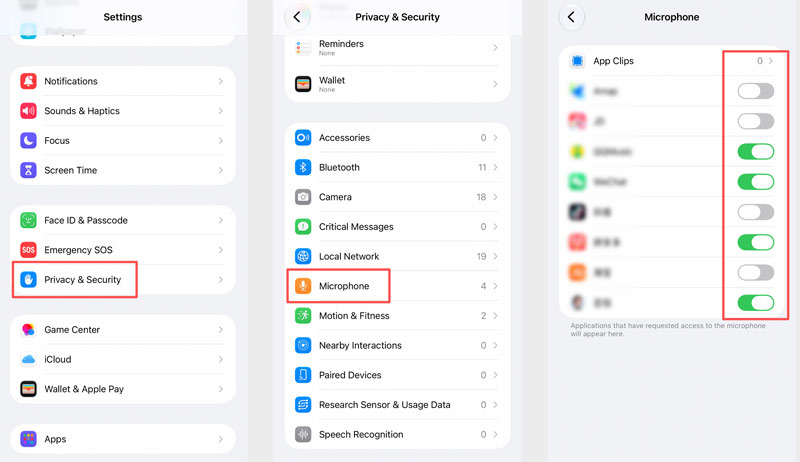
If the app isn’t listed there, open the app and try to use the microphone, and iOS should prompt you to allow access.
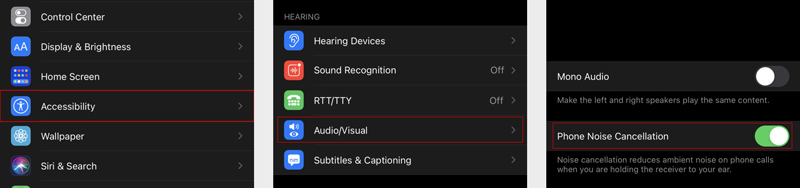
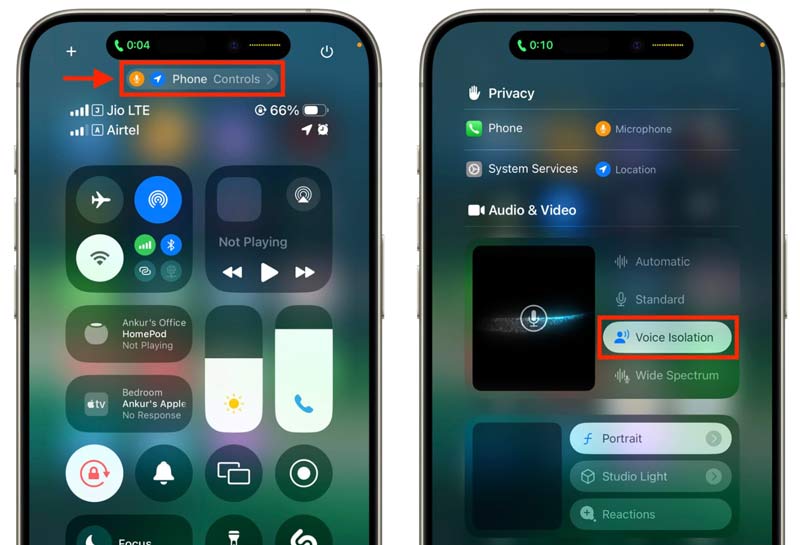
Phone Noise Cancellation reduces background noise during calls when you are holding the receiver to your ear. It’s mainly designed to make your voice clearer. But in some situations, it can actually cause problems. This feature is available and enabled by default on iPhone 12 and earlier models. You need to disable Voice Isolation on newer iPhones.
Go to Settings > Accessibility > Audio & Visual. When you locate Phone Noise Cancellation, toggle it off. If the option isn’t there, that means your iPhone doesn’t support it.
On a newer iPhone, you can open the Control Center, tap Phone Controls, and then turn off Voice Isolation.
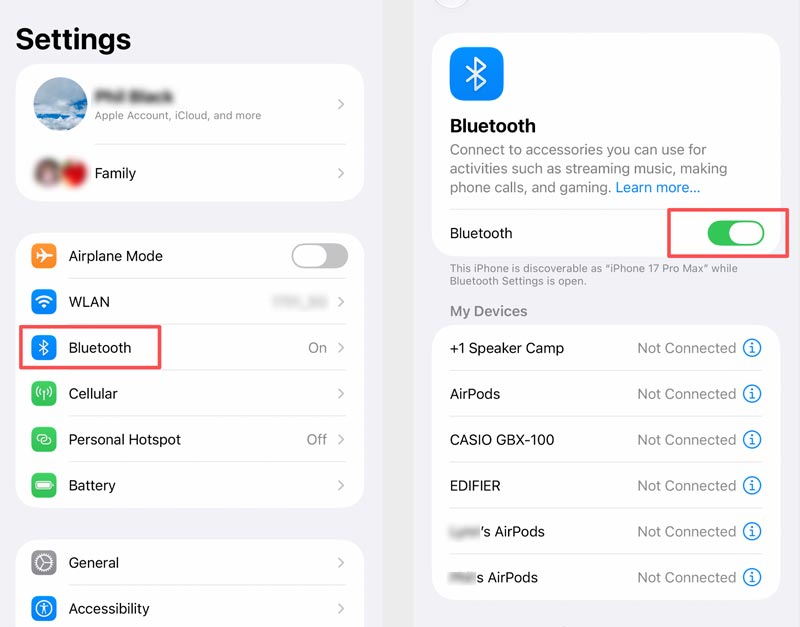
If your iPhone is connected to a Bluetooth device, such as Bluetooth headphones or a wireless speaker, it may be routing your microphone audio to that device. This is pretty common when you’ve been using AirPods or a Bluetooth headset and then try to make a call without them. The call connects, but the other person can’t hear you. Because your iPhone is still sending audio to the Bluetooth device.
Open Settings > Bluetooth and toggle Bluetooth off. If you are in the middle of a call, tap the audio route button and select iPhone instead of your Bluetooth device.
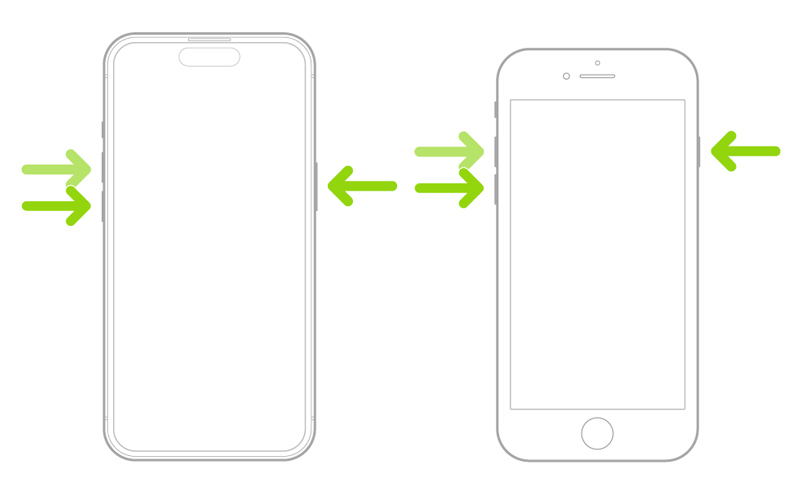
A quick restart may easily resolve the iPhone microphone problem. This operation can clear temporary software glitches. You can power off your phone using the standard steps. Wait a few minutes, then restart it.
If a standard restart doesn’t help, try a force restart. Use the button combination based on your iPhone model to force-reboot your device. This deeper reset can easily clear audio subsystem glitches that a standard restart might miss. Once the phone boots back up, test your microphone to see whether it captures your voice normally.
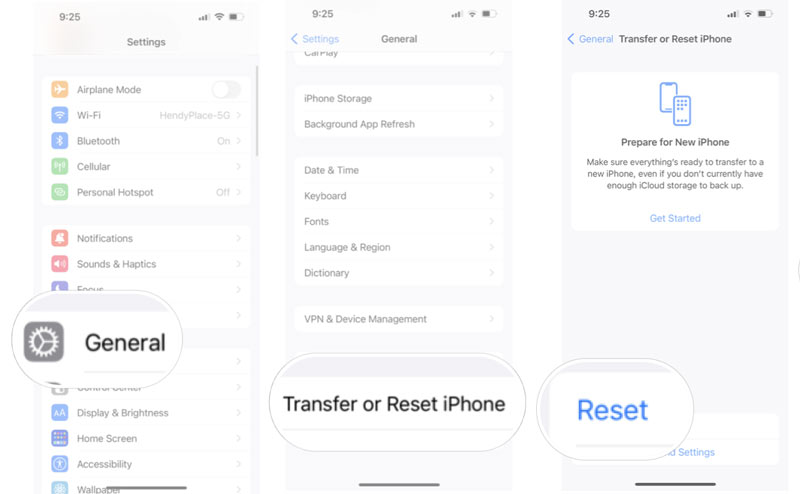
If none of the above methods work, corrupted settings could be the issue. Resetting all settings returns your iPhone’s configuration to factory defaults.
Go to Settings on your iPhone and tap General > Transfer or Reset iPhone > Reset > Reset All Settings. You’ll be asked to enter your passcode and confirm. Your iPhone will restart, and when it comes back, test the microphone immediately. If the problem is gone, you know it was a settings corruption issue.
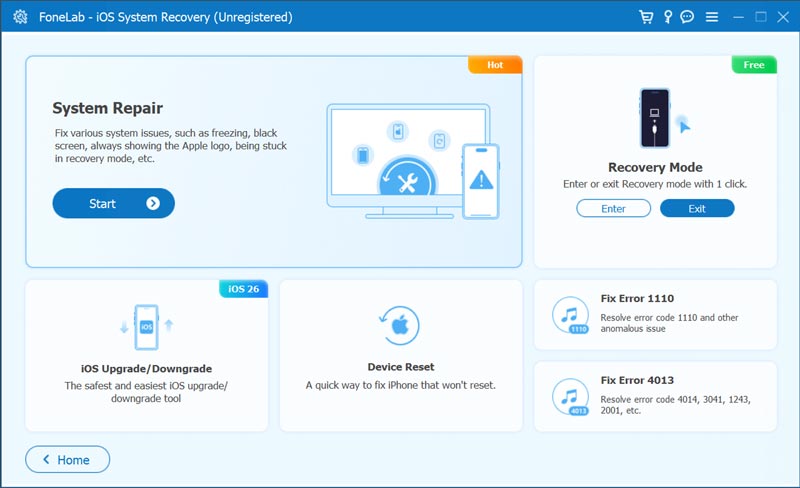
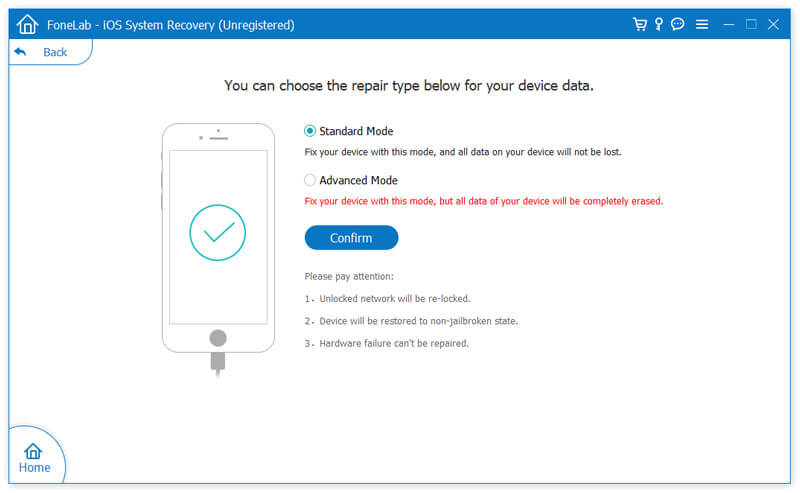
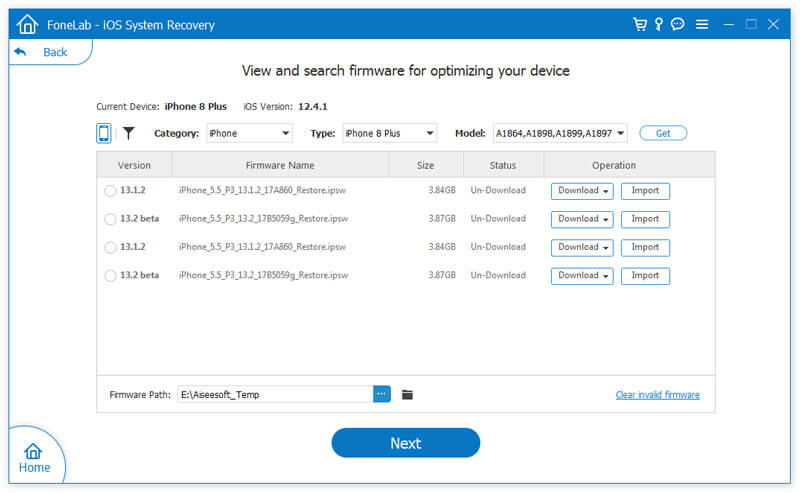
Sometimes the iPhone microphone not working problem isn’t about settings or permissions. It’s a deeper iOS system issue that started after an incomplete iOS update or a software crash. If you have tried everything above and the microphone still refuses to cooperate, a dedicated iOS repair tool like Aiseesoft iOS System Recovery can fix the underlying system files.
 100% Secure. No Ads.
Not all microphone issues can be solved with software. If you’ve worked through every step above and your microphone still doesn’t work, you’re likely looking at a hardware problem.
Hardware microphone failures usually come with a few signs. The most obvious is when the microphone doesn’t work in any app. If the audio is consistently muffled even after thorough cleaning, that’s another red flag.
A physical drop can crack the microphone capsule or dislodge its housing. Water damage is another leading cause. If your iPhone has been exposed to liquid, even if it’s rated IP68, its internal components may be damaged. Salt water, pool water, and sugary drinks are especially damaging.
If your iPhone’s hardware is damaged, you’d better let a professional handle it. Seek help from Apple’s official support, such as Apple Stores, Apple Authorized Service Providers, or Independent Repair Providers. Before the repair, back up your iPhone data to iCloud or your computer first.
If your iPhone is still under warranty or covered by AppleCare+, microphone repairs may be free or low-cost. Out-of-warranty microphone repairs are typically expensive, especially through Apple.
Question 1. Why is my microphone not working on my iPhone?
An iPhone microphone not working issue is often not caused by hardware. It’s usually because an app permission is turned off, Bluetooth is routing audio elsewhere, or a temporary iOS glitch is causing it. Moreover, hardware damage can be a culprit.
Question 2. Why does my microphone work in some apps but not others?
As mentioned above, this situation is almost always a permissions issue. You can go to Privacy & Security > Microphone in Settings to check the target app. Make sure the app in question has microphone access enabled.
Question 3. Will resetting all settings delete my iPhone data?
No. Reset All Settings on your iPhone only returns the device’s configuration to defaults, such as Wi-Fi passwords, wallpapers, notification settings, and privacy permissions. This action does not delete your personal data, including videos, photos, social apps, messages, documents, and others.
Conclusion
An iPhone microphone not working is an urgent issue, especially if you rely on your phone for work calls, voice messages, or camera recordings. But most microphone problems have simple solutions. Follow these 8 methods one by one to fix the issue. And if all else fails, don’t hesitate to seek professional help.
 8 Best Free Online Mic Recorders for Unlimited Voice Recordings
CRead and get the top 8 online mic recorders. You can record your voice through a microphone on Windows and Mac for free with simple steps quickly.
 Ultimate Background Noise Canceling Microphones Review & More Info
Background noise-canceling microphones are essential devices for recording audio or doing a voice-over. Read this article as we reviewed the best devices to have.
 Top 7 Noise Canceling Earbuds You Can Purchase This
Noise-canceling earbuds are now available on the market, but which one you needed to purchase? If you aren't sure what to pick, read this for an idea.
 Leave your comment and join our discussion
Fix your iOS system to normal in various issues like being stuck in DFU mode, recovery mode, headphone mode, Apple logo, etc. to normal without any data loss.
100% Secure. No Ads.
100% Secure. No Ads.

*Required field
*Please enter a valid email